
That New Teacher
Play That New Teacher
That New Teacher Screenshots





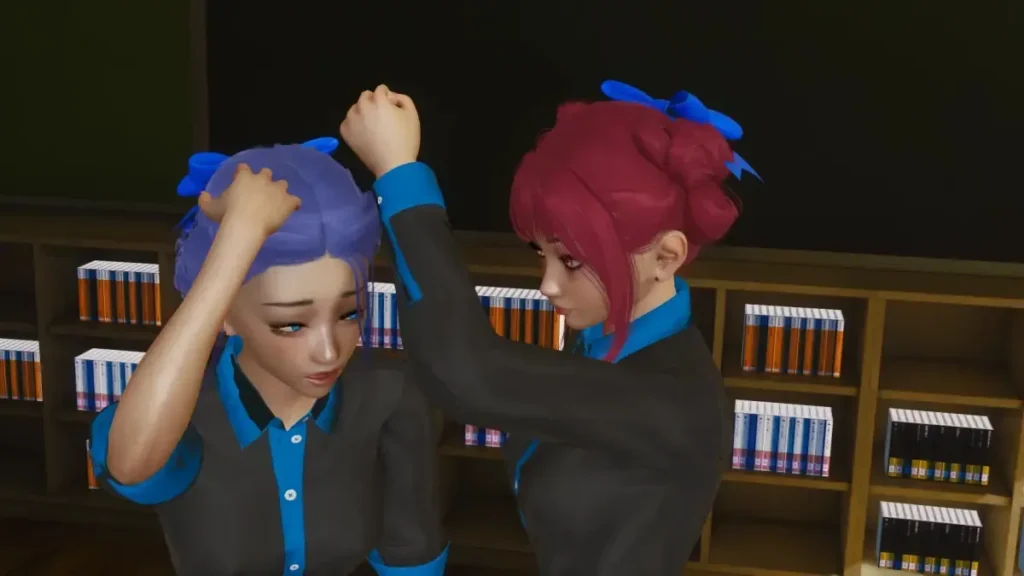





That New Teacher review
Dive into the Enforcer Role and PARE System Secrets
Ever wondered what happens when you step into a school where rules are rewritten and you’re the ultimate authority? That’s the thrill of That New Teacher, the gripping adult visual novel where you play as the Enforcer in a private school with a radical new curriculum. After landing this job post-redundancy, you wield absolute power via the PARE system—Punishment and Reward Exchange—deciding students’ fates based on behavior and grades. I remember my first playthrough; one bold choice unlocked a steamy subplot that kept me hooked for hours. This guide unpacks everything from core mechanics to hidden paths, helping you master this Ren’Py-powered gem updated to v0.7.0. Ready to enforce some order?
What Makes That New Teacher Gameplay So Addictive?
Let me paint you a picture. 🎨 I was fresh off a soul-crushing layoff from a sterile lab tech job, scrolling through gaming forums to distract myself, when I stumbled onto That New Teacher. The title sounded simple, maybe even quaint. I expected a cute dating sim. What I got was a power fantasy that completely re-wired how I think about narrative games. This isn’t about grading papers and holding parent-teacher conferences. This is about becoming the absolute authority in a school that plays by its own, very twisted, rules. 😈
The moment you step into the Enforcer role, you realize That New Teacher gameplay is something else entirely. You’re not an educator; you’re the disciplinary heart of a private institution where old-fashioned methods are not just accepted, they’re the curriculum. Your tool isn’t a red pen—it’s the PARE system, a brilliant mechanic that stands for Punishment and Reward Exchange. This isn’t a simple good cop/bad cop toggle. It’s a delicate, intoxicating economy of control where every interaction is a transaction. Your That New Teacher choices in wielding this system don’t just affect a dialogue tree; they forge loyalties, incite rebellions, and unlock deeply personal (and explicit) pathways with the students under your charge. The branching paths in That New Teacher are some of the most reactive I’ve ever seen, making each playthrough a unique story of your own creation.
How Does the Enforcer Role Change Everything?
Forget everything you know about teacher-student dynamics in games. 🚫 The Enforcer role is a masterclass in subverting expectations. You’re not there to inspire young minds with poetry or algebra. Your mandate is to correct behavior and improve academic performance through a very specific, very intimate form of corporal punishment. This premise instantly flips the script on power dynamics.
Suddenly, you’re not trying to be liked; you’re learning to be effective. A student acts out in class? Their grade slips? That’s not a problem—it’s an opportunity. An invitation to intervene. This role removes the moral ambiguity of traditional systems and replaces it with a clear, if provocative, gameplay loop: identify the issue, choose your method of correction (or encouragement), and manage the consequences. The sheer audacity of this premise is what hooks you. It makes you complicit in this world’s logic, and navigating that space is a thrilling, often surprising, challenge. Mastering how to play That New Teacher starts with fully embracing this unique authority.
Mastering the PARE System for Maximum Impact
The PARE system is the brilliant, beating heart of the game. Punishment and Reward Exchange. Think of it as your behavioral stock market. 📈 Every student has a core need—maybe they’re acting out for attention, or failing because they’re lazy, or struggling due to stress. Your job is to diagnose that need and apply the correct “currency.”
- Punishment Paths are for correction. A student mouths off? A strict, physical reprimand might be in order. This can instill fear, demand respect, or simply vent your own frustration. But beware: overuse breeds resentment, and a resentful student might rebel, spread rumors, or shut down completely.
- Reward Paths are for reinforcement. A student shows slight improvement? Offering a “positive incentive” can build trust and encourage repetition of good behavior. This fosters loyalty and opens doors to more willing, consensual interactions.
The magic is in the exchange. It’s not just about what you do, but the context. Punishing a proud, stubborn student might backfire spectacularly, while rewarding a genuinely eager-to-please one too soon might make you seem weak. The system is deeply tied to resource management—your time and energy. You can’t intervene with everyone every day. You must choose your projects carefully, investing your efforts where they will yield the best “return” in terms of behavior correction and relationship depth.
To understand how these mechanics weave together, here’s a breakdown:
| Mechanic | Description | Impact on Story |
|---|---|---|
| Dialogue Choices | Every conversation presents options aligned with Punish, Reward, or Neutral stances. | Directly feeds the PARE system, altering Relationship Meters and steering the narrative toward specific character arcs and endings. |
| Resource Management | Managing your daily Time and Energy to interact with students, recover, or pursue side activities. | Forces strategic priority. Choosing who to engage with directly determines which branching paths in That New Teacher become available to you. |
| Relationship Meters | Hidden meters tracking Submission, Trust, Resentment, and Loyalty for each character. | These are the gatekeepers. Reaching certain thresholds unlocks new dialogue, private encounters, and the game’s vivid animated scenes, from fondling to more advanced intimacies. |
| Branching Narrative | The core story structure shaped by your cumulative That New Teacher choices. | A single major decision can lock out entire character routes or plotlines, creating vastly different playthroughs and encouraging multiple replays. |
Key Choices That Unlock Branching Paths and Scenes?
Let me share a case study from my own playthrough. I focused on a particular student who was brilliant but defiant. My initial strategy was pure Enforcer role dominance. Every infraction met with harsh punishment. I saw her Submission meter rise, and I unlocked scenes… but they felt tense, fraught with silent anger. Then, she rebelled. Sabotaged my efforts with another student, leading to a locked path and a “bad end” for her route. 😬
I replayed, focusing on the same student. This time, I used the PARE system more carefully. I punished the truly defiant acts, but I also rewarded small signs of effort. I invested time in conversations that weren’t about discipline. Slowly, her Trust and Loyalty meters grew. The scenes I unlocked were completely different—not just in action, but in emotion. They felt earned, mutual, and far more satisfying. This one character had two wildly different narratives based entirely on my management of the punishment reward exchange.
This is the genius of That New Teacher gameplay. A single choice in Chapter 2 can echo into Chapter 6, opening or closing doors you didn’t even know existed. Do you comfort a crying student after a harsh lesson, or do you tell them to toughen up? Do you spend your Saturday energy investigating a student’s home problems, or do you use it to rest and recover your own stats? These are the forks in the road that define your story.
And let’s talk about the presentation. The game runs on Ren’Py, and it shines. The art is fantastic, but the fact that the intimate scenes are both animated and uncensored adds a layer of immersion that still visual novels often lack. It feels like a direct reward for your careful strategy, a vibrant payoff for navigating the branching paths in That New Teacher successfully.
Pro Tip: Always export your save before a major version update (like going from 0.7.0 to 0.8.0ea). While devs try to ensure compatibility, having a backup saves you from potential heartbreak if a glitch occurs! 💾
How to play That New Teacher for maximum enjoyment means embracing experimentation. Save often before big decisions. Replay not just for different scenes, but to see how the subtle story threads change. There’s no single “right” way—only your way.
And this is just scratching the surface of the systems. What makes it truly addictive is how these mechanics are wrapped around genuinely intriguing characters, each with their own masks to peel back and secrets to discover… but that’s a teaser for our next deep dive. 😉
To get you started on mastering this web of choices, here are my top pro-tips:
- Listen Between the Lines: A student’s dialogue often hints at whether they’ll respond better to Punishment or Reward. The proud ones might need breaking down, while the insecure ones need building up.
- Specialize Early: Don’t try to max out relationships with everyone in one run. Pick 2-3 “focus students” per playthrough to see their stories through to a meaningful end.
- Balance Your Resources: It’s tempting to use all your Energy on interactions, but a depleted Enforcer makes poor choices. Schedule recovery days.
- Embrace Failure: Getting a “bad end” isn’t a loss; it’s vital data. It shows you the limits of a strategy and makes your successful run feel earned.
- The Neutral Path is a Path: Sometimes, choosing not to engage with the PARE system (a neutral dialogue option) is the key to unlocking unique trust-based moments that pure punishment or reward can’t access.
There you have it—the full scoop on That New Teacher, from its innovative Enforcer premise and PARE-driven mechanics to the steamy, choice-fueled paths that keep you coming back. I dove in expecting a quick play, but the depth of student interactions and school secrets turned it into a weekend obsession. Whether you balance strict discipline with tempting rewards or explore every erotic branch, this game delivers power fantasies with real consequences. Grab the latest v0.7.0 APK, fire it up, and start enforcing. What’s your first big decision going to be? Share your wildest playthrough in the comments—I’d love to hear how you wield that authority!