Healslut
Play Healslut
Healslut Screenshots






Healslut review
Master the interactive fantasy experience blending strategy, storytelling, and dynamic relationships
Healslut represents a distinctive approach to interactive gaming, combining narrative-driven storytelling with strategic gameplay mechanics in a high-fantasy setting. Players take on the role of a support-class healer navigating complex relationships, resource management, and morally nuanced decisions. This guide explores what makes Healslut stand out, from its innovative mechanics to its character customization options. Whether you’re curious about the game’s core loop, relationship dynamics, or replayability features, this comprehensive overview covers everything you need to understand this unique gaming experience.
Understanding Healslut: Core Mechanics and Gameplay Loop
Ever loaded up a fantasy RPG, picked the healer, and spent the next forty hours staring at health bars and spamming the same two spells? 🙄 You’re not alone. That classic support role, while vital, often feels more like a spreadsheet job than an epic adventure. What if your every decision as a healer mattered beyond just numbers? What if it changed the story, shaped a relationship, and truly made you feel like the indispensable heart of the party?
Welcome to Healslut, an interactive fantasy game that completely reimagines what it means to play support. This isn’t about passive button-mashing; it’s about becoming the strategic and emotional anchor of a dynamic duo. Forget complex skill rotations—here, your mind is your most powerful tool. Let’s peel back the curtain on the Healslut gameplay mechanics that make this experience so uniquely captivating.
What Makes Healslut Different From Traditional RPGs?
The core difference is intent. In a traditional MMO, your goal as a healer is binary: keep the green bars full. Your relationship with the tank or DPS is transactional, defined by utility. Healslut transforms this dynamic into something deeply personal and narrative-driven. You’re not just healing a generic avatar; you’re sustaining a specific, persistent companion—a powerful warrior whose survival and success are literally in your hands. This dependency creates a rich psychological landscape to explore.
The game masterfully blends strategy, storytelling, and dynamic relationships into one seamless experience. Your success isn’t measured by a combat log parse, but by the evolving story you co-author with your companion. Every choice, from a tactical healing decision to a flirtatious remark, carries weight. This narrative-driven gameplay ensures no two playthroughs are alike, as the tone of your partnership can range from professional and respectful to teasing and dominative, all based on your actions.
Think of it this way: in a standard RPG, you play a class. In Healslut, you play a role, with all the nuance, personality, and consequence that entails. The game removes the clutter of massive parties and complex UIs, focusing intensely on the one-on-one connection and the strategic depth that can be mined from it.
The Foundation: How the Healing and Support System Works
At its heart, the healer class dynamics in Healslut are built on two finite resources: Energy and Focus. This is the cornerstone of all support character mechanics.
- Energy is your classic mana pool—it fuels your direct healing spells and protective wards. It’s a slow-to-regenerate resource, making every spellcast a considered choice.
- Focus is the more innovative resource. It represents your mental clarity and connection to your companion. You spend Focus to perform “Interventions”—special actions that can dramatically turn the tide of battle, like creating a devastating opening for your warrior or cleansing a crippling debuff. However, if your Focus drops too low, your spellcasting becomes inefficient, wasting more Energy.
The genius of this system is that it turns healing from a reaction into a proactive resource management strategy. You’re not just waiting for damage to come in; you’re constantly analyzing the flow of combat, predicting threats, and deciding when your intervention is most crucial for both victory and narrative impact.
Here’s the core gameplay loop:
1. Observe: Watch your companion’s battle, monitoring enemy tells and your partner’s stamina.
2. Analyze: Judge the severity of the threat. Is this a moment for a cheap, efficient heal, or a costly, battle-changing Intervention?
3. Decide: Choose your action based on your resources and your desired narrative outcome.
4. Consequence: Your choice directly affects the combat result and triggers a reaction from your companion, shaping future dialogue and story branches.
This loop creates constant, meaningful engagement. You’re never just waiting for a cooldown.
To visualize how these mechanics translate into meaningful play, let’s look at the key decision points:
| Gameplay Element | Role & Impact | Player Agency & Consequence |
|---|---|---|
| Energy (Mana) | Fuels direct healing & protection. A blunt, necessary resource. | Do you spend it now on a small heal, or save it for a potential crisis? Running out leaves your companion vulnerable. |
| Focus (Mental Clarity) | Enables powerful “Interventions” and maintains spell efficiency. | The core strategic resource. Using it for a flashy play might win the fight but leaves you mentally drained, affecting later scenes. |
| Dialogue Choices | Shapes personality, defines relationship dynamics, and unlocks narrative paths. | Every interaction is a tool. Encouragement might bolster their confidence, while teasing could lead to recklessness or deepened intimacy. |
| Combat Interventions | High-impact actions that alter battle tempo and create narrative “moments.” | Timing is everything. A perfectly-timed Intervention is celebrated; a mistimed one is seen as meddling or a lack of trust. |
Resource Management and Strategic Decision-Making
This is where the game truly shines as a cerebral experience. Your resource management strategy is the bridge between cold, hard gameplay and hot, dynamic storytelling. Managing Energy and Focus isn’t just about math; it’s about psychology and roleplay.
Let’s talk risk vs. reward. Say your companion is facing a formidable opponent. They’re at 60% health—not critical, but not safe. You have enough Focus for one major Intervention.
- The Safe Play: You spend a chunk of Energy on a solid heal, topping them off. The fight continues longer, using more of both your resources, but the risk of failure is low. Your companion might comment on your “cautious” or “reliable” support.
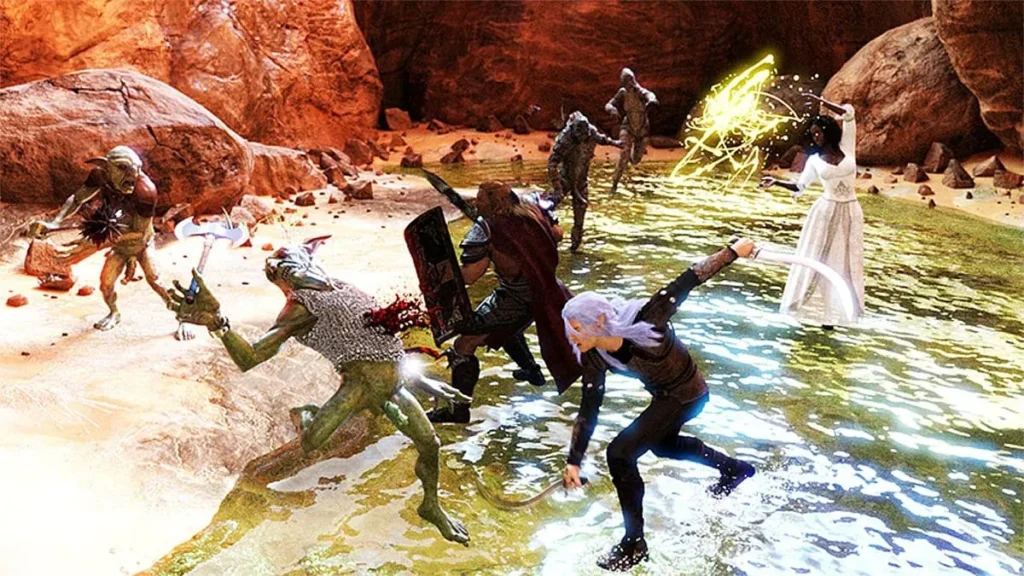
- The Bold Play: You hold your heal. You let their health dip lower, baiting the enemy into an overextended attack. At the last second, you spend your Focus on a “Countering Light” Intervention, not only healing a burst of damage but also stunning the foe, allowing your warrior to land a finishing blow. This is high-risk—if you mistime it, it’s a disaster. But if you succeed? The combat ends swiftly, conserving resources in the long run, and your companion reacts with exhilaration and admiration for your daring and perfect sync.
This kind of strategic decision-making is constant. Do you use your Focus early to secure a quick, dominant victory that inflates your companion’s ego? Or do you conservatively manage it, ensuring you can pull them from the brink of a drawn-out, gritty battle that might humble them? The game’s narrative-driven gameplay ensures both approaches are valid and tell different stories.
The consequences are deliciously spicy. Success breeds confidence and can open up new, more playful or confident dialogue options. Failure, however, is not just a “game over” screen. Perhaps a failed Intervention leads to your companion getting wounded. The subsequent scenes could involve you nursing them back to health—a moment of vulnerability that deepens your bond in a completely different way. Or, it could spark frustration and a testy argument about competence, leading to a frosty dynamic you’ll need to thaw.
Pro Tip: Your companion’s personality isn’t static. A warrior who appreciates bold plays in one chapter might crave steady, reliable support after a story beat that shakes their confidence. Pay attention to the subtext in their dialogue to inform your resource management strategy. 🧠
Real Scenario Example: The Cascade of a Single Choice
Imagine your companion, Aric, is fighting a corrupted knight. You’re low on Energy but have high Focus.
- The Decision: You let Aric take a few hits, planning a Focus-heavy Intervention for a dramatic finish. He grunts in pain but holds the line.
- Immediate Combat Consequence: You execute the Intervention perfectly. A blinding light seals your victory. Combat ends.
- Dialogue Trigger: In the aftermath, Aric turns to you, breathing heavily. The dialogue choice system presents three options:
- “I had total faith in you. A perfect opening.”
- “You’re welcome. Try not to get so battered next time.”
- Say nothing, just gently check his wounds.
- Narrative Branching:
- Choosing 1 (Encouraging) strengthens his confident persona. He might later take more initiative in battle and in flirting.
- Choosing 2 (Teasing/Sarcastic) challenges him. It could lead to a fun, competitive rivalry or, if his morale is low, bruise his ego and make him withdrawn.
- Choosing 3 (Caring/Action) speaks volumes without words. This might unlock a softer side to his character, leading to more vulnerable conversations later.
- Long-term Gameplay Impact: The chosen path influences his future battle behavior (more aggressive vs. more cautious), the tone of campfire conversations, and even which quests or intimacy scenes become available. Your singular tactical choice has rippled out to define the emotional core of your journey.
This is the essence of Healslut gameplay mechanics. It’s a game where your strategic mind and roleplaying heart are in constant conversation. You master not just a set of spells, but the art of partnership itself. Every allocation of Energy, every expenditure of Focus, and every word spoken is a brushstroke on the canvas of your shared story. It’s a profound, engaging, and deeply personal twist on the interactive fantasy game that proves true power isn’t always about dealing the final blow—sometimes, it’s about knowing precisely when, how, and why to offer your strength to another.
Healslut stands out as a thoughtfully designed interactive experience that transforms familiar gaming archetypes into something meaningful and engaging. By combining strategic gameplay with narrative depth, the game offers players genuine agency in shaping their character’s journey and relationships. The customization options, relationship mechanics, and consequence-driven storytelling create a world where every choice matters. Whether you’re drawn to the strategic elements, the character development opportunities, or the branching narrative paths, Healslut delivers a gaming experience that rewards exploration and replayability. The game’s approach to blending resource management with emotional storytelling demonstrates how interactive entertainment can create compelling experiences that resonate with players seeking depth beyond traditional gameplay loops. For those interested in narrative-driven games with meaningful choices and complex character dynamics, Healslut offers a distinctive and immersive experience worth exploring.